
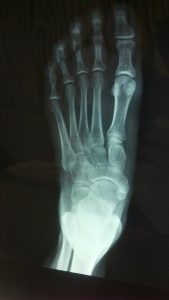
 The foot is a complex structure consisting of several small bones, muscles, tendons, and other soft tissues responsible for bearing your weight and helping you navigate the world around you at your desired pace. With its unique structure and responsibilities, it is no wonder that the foot is susceptible to injury, including fractures, or breaks in the bones of your foot.
What is a foot fracture?
A foot fracture is a bone break in one of the bones of your foot. The most common types of foot fractures include toe fractures and metatarsal fractures. As described, a toe fracture is a break in the toes of your foot, while metatarsal fractures are breaks in the long bones that attach to the base of each toe. Fractures that break through the skin are known as open or compound fractures, while fractures that do not penetrate through the skin are known as closed fractures. Fractures are broken into two distinct categories: traumatic and stress fractures.- Traumatic fractures, or acute fractures, are the result of a direct impact to the foot such as stubbing your toe or dropping an object on your foot.
- Stress fractures, also known as hairline fractures, are tiny breaks that are most often caused by repetitive stress from activities, abnormal foot structures or deformities, and improper footwear.
Causes
Your feet can tolerate a lot of pressure from daily activities and strenuous exercise, but too much pressure too quickly can cause the bones to fracture or break. Foot fractures can occur for several reasons including:- Direct trauma
- Falling from a significant height
- Missteps
- Overuse
- Tripping or stumbling
Symptoms
Common signs or symptoms of a foot fracture may include:- A bone is out of place and/or bone is showing through the skin
- Bruising
- Difficulty moving your foot or toe
- Heat or warmth at the site of injury
- Inability to place weight or pressure on the foot
- Intense pain
- Numbness
- Redness
- Swelling
- Tenderness or tingling
- Coldness or numbness
- Deformation
- Discoloration
- Open wound near the site of suspected break
Treatments
If you suspect a foot fracture, contact your doctor for a thorough physical examination and proper diagnosis. Your doctor may order imaging tests to determine the precise location and severity of the fracture. Treatment will depend on the bone, location of the fracture, and severity of the injury. In minor cases, rest and ice therapy will allow the fracture to heal within several weeks. For more moderate cases, common treatment options for foot fractures include:- Immobilization – A cast, boot, crutch, and/or scooter can help to keep the foot in an ideal position as it heals and prevents you from placing weight on the foot.
- Medicine – Anti-inflammatory medication can help to decrease pain and swelling.
- Physical therapy – Physical therapy may be used to help strengthen muscles and ligaments during recovery and restore your foot flexibility and strength.
- Surgery – Surgery may be necessary in severe cases to realign pieces of bone or ensure they remain in place during the healing process.
